

Your customers keep asking you for things they could look up themselves
Application flows, account areas and partner portals for companies whose customers, students or resellers currently get their answers by email.
6–16 weeks from €25,000
This is for you if
- Your team answers the same five questions every day Where is my order. When is the invoice coming. What documents do I still owe you. Someone on your side knows each answer in ten seconds, and spends the day giving them one email at a time.
- Onboarding a new client means walking them through a form Documents arrive by email, in the wrong format, one of them missing. Someone chases what is missing, and the file sits half-open until they do.
- Partners ask for reports somebody builds by hand Each one wants a different cut of the same data. The request goes to one person, who exports it, reshapes it in a spreadsheet and sends it back.
- You gave outside users a login to an internal system It was built for people who know what every screen does. Now a customer is inside it, seeing more than they need to, and you are hoping nobody clicks the wrong thing.
- The requests arrive in a few weeks, and the deadline does not move Admissions, renewals, a campaign. The year's volume lands in a short window, and the process that holds when it is quiet breaks exactly when it counts.
What we actually build
Someone creates an account, uploads the documents the process asks for, and sees where their file stands without calling anyone. Behind it, an interface where your team reviews, asks for corrections and records a decision.
One screen with their orders, invoices, documents and open requests — what they used to ask for by email, in a list they can filter and download themselves.
Price lists, order entry and their own numbers, scoped so each partner sees only what belongs to them, with the report cuts they currently request by email.
Files checked against rules before they are accepted, filed against the right record, and moved through review with who decided what written down at each step.
The reports people ask for by email, produced on demand with the filters they actually use, and delivered on a schedule to the ones who want them every month.
Identity, documents and approvals collected in order, with the account opening only once everything required is present and checked.
Work we have delivered in this category
These systems are used by people outside your organisation, and that changes what matters. Someone who cannot find what they came for does not open a support ticket — they call, and the call lands on the person the portal was supposed to free up. The online enrollment platform we built for University POLITEHNICA of Bucharest is the clearest example in this category: candidates upload their documents and follow the state of their own file, while the admissions office works from one interface instead of a stack of paper.
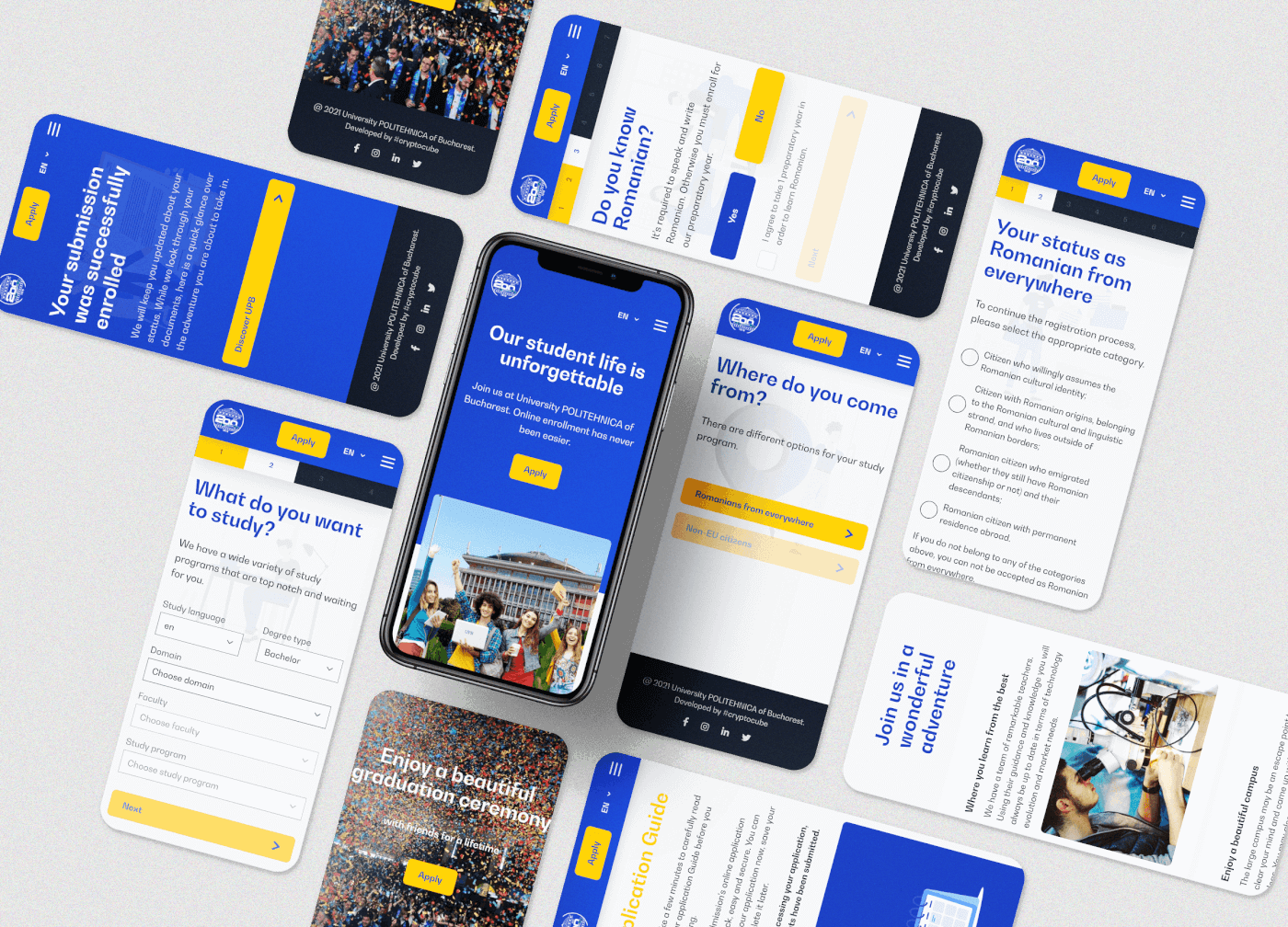 University POLITEHNICA of Bucharest
Online enrollment platform at University
University POLITEHNICA of Bucharest
Online enrollment platform at University
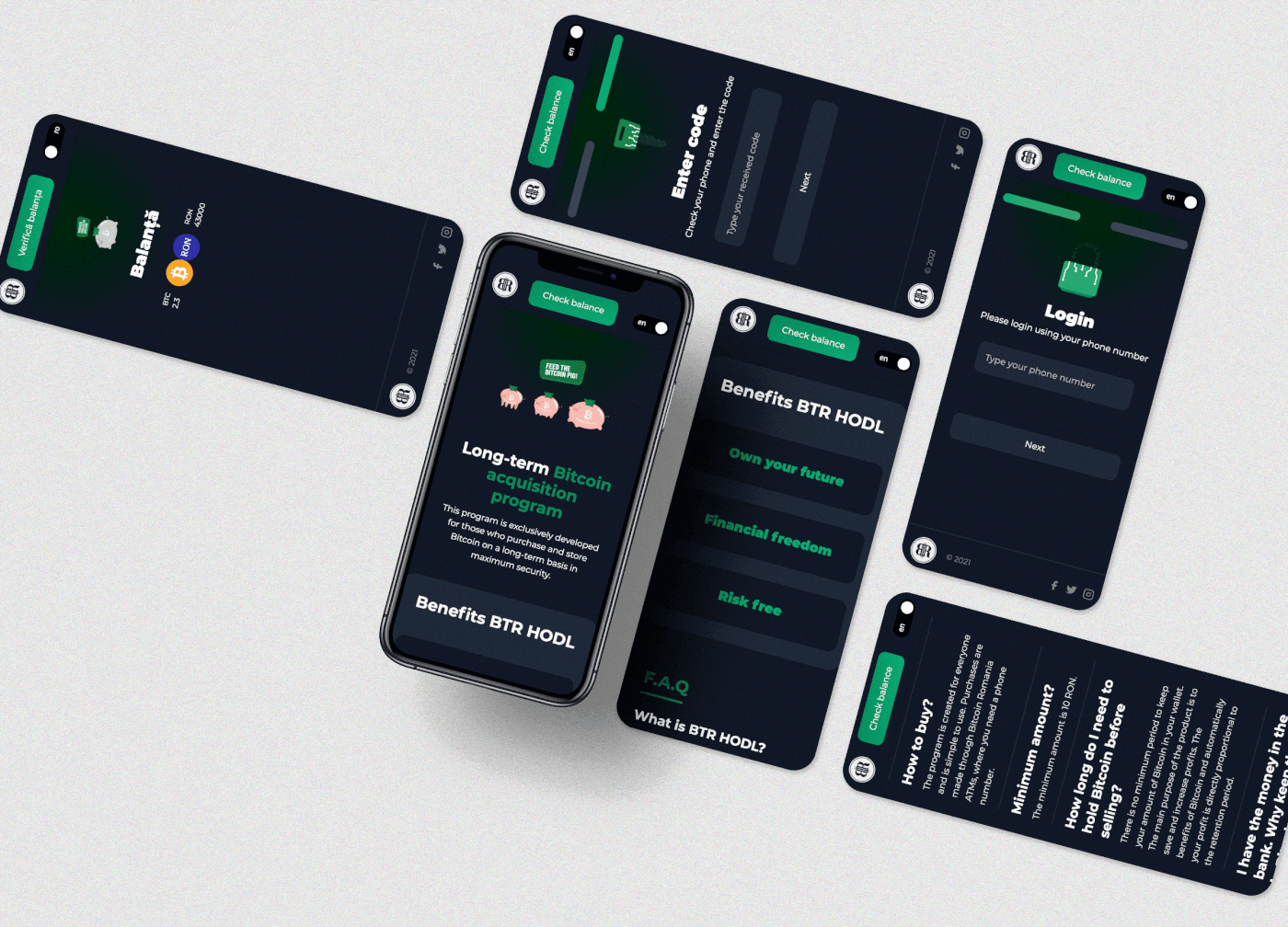 Bitcoin Romania
HODL Platform for Bitcoin
Bitcoin Romania
HODL Platform for Bitcoin
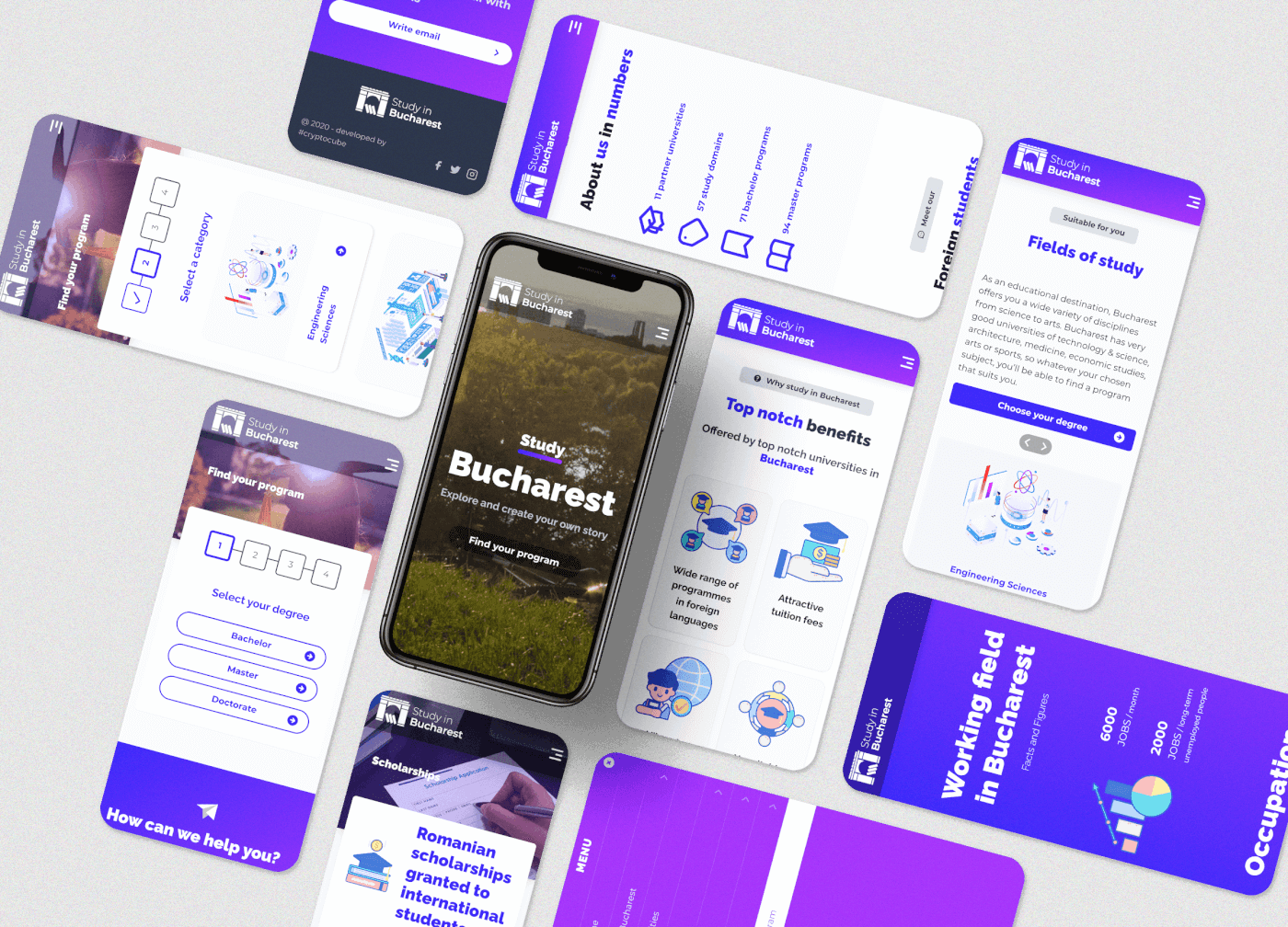 University POLITEHNICA of Bucharest
Web platform to present Universities from Bucharest
University POLITEHNICA of Bucharest
Web platform to present Universities from Bucharest
How a project runs
-
Scoping One to two weeks
We sit with the people who answer these questions today, and with a few of the people asking them. What comes out is the list of things an outside user has to be able to do without help.
What you get: A written scope with the screens listed, the roles defined, the integrations named, and a price for the first phase.
What we need from you: Access to whoever handles these requests today, and one person on your side who can decide.
-
The first flow, in production Four to six weeks after scoping
We build the single path that carries the most volume, connected to real data rather than to a demo database, and put it in front of a small group.
What you get: One working flow in production, used by real users, with the current process still available beside it.
What we need from you: A handful of users willing to try it early and tell us what is confusing.
-
The rest, a phase at a time The remainder of the project
Each phase adds a part of the portal and goes live when it is ready. You are never waiting until the end of the project to find out whether people use it.
What you get: Working software in production at the end of every phase, with the manual process retired only once you agree it can be.
What we need from you: A decision at the end of each phase about what comes next.
-
Handover, and what happens after Ongoing, on a monthly agreement you can end
We hand over the code, the infrastructure and the documentation — which you have owned since the first phase, not since the last one — and keep running the portal if that is what you want.
What you get: Repository and infrastructure access in your own accounts, deployment instructions, and an engineer who knows the system.
What we need from you: A decision on whether your own team takes it over or we keep it.
What it costs, and what moves the number
Projects in this category start at €25,000 and run six to sixteen weeks. That buys a scoped portal with its most-used flow live in production, not a prototype. You get a price before each phase begins, so the number you approve is the number you pay for that phase.
- Number of roles, and what each may see
- One kind of user is a setting. Customers, partners and your own staff looking at the same screen with different visibility is a design problem that reappears in every part of the portal.
- Where people sign in
- A portal with its own accounts is straightforward. Signing in against a system you already run is separate work, and what is possible depends on that system rather than on us.
- What happens to documents
- Uploading a file is the small part. Checking it before it is accepted, keeping it where it has to be kept, and being able to say later who saw it is the rest.
- How much of the data lives elsewhere
- Every system the portal reads from adds work: getting the data out, matching records that do not match, and deciding what the portal shows when that system is unavailable.
- Volume, and how it arrives
- A portal used steadily by a few hundred people and one that takes a year of applications in three weeks are different systems, mostly in the parts nobody sees.
Questions we get at this point
Some will, and that is the measure worth watching. The flow that carries the most calls goes live first, so by the end of the first phase you can see whether the volume moved. If it did not, we find out why before building the rest.
An external portal changes who can reach your data, so roles, what each one may see and what gets recorded are settled during scoping rather than added afterwards. The infrastructure it runs on is in your accounts from the first phase.
Usually because it was built around how the system stores data rather than around what someone came to do. We start from the questions your team answers by email today, and build the shortest path to each answer.
Where these systems have run
Portals in this category have been delivered for a public institution, where the calendar is fixed and most of the year's volume arrives in a few weeks.
If this is not quite your problem
Dashboards, admin platforms and workflow systems that give your team one place to work. Or a replacement for t...
Automation & integrationsIntegrations, approval flows and document processing for companies paying for systems that do not talk to each...
New products & first versionsArchitecture, build and launch of a first version that goes into production — not a prototype that demos well...
