

Software intern & tool-uri de business
Dashboard-uri, platforme de administrare și fluxuri de lucru care dau echipei un singur loc în care lucrează. Sau înlocuirea sistemului vechi de care nu se atinge nimeni.
16–52 weeks from €40,000
Pagina asta e pentru tine dacă
- Your team works in four systems and copies data between them Someone exports a file from one system every Monday and pastes it into another. By Wednesday the two disagree, and no one can say which is right without checking by hand.
- The system your operations run on was written by someone who left It works. Nobody currently employed knows why it works, so every change is made carefully, by someone guessing, and tested in production.
- Every new report takes two days of someone in IT The data exists. Getting it out means a request, a queue and a developer writing a query by hand — so most of the questions worth asking never get asked.
- The process is documented in a file, not in the software There is a procedure everyone agrees on and a system that does not enforce it. Steps get skipped, approvals happen in chat, and the audit trail is a folder of emails.
- Your current vendor quotes a large number for every change, or has stopped replying You are paying to keep a system you cannot modify. The quote for a small change is high enough that you stop asking, and the roadmap belongs to someone else.
Ce construim, concret
A table of records with search, filters and bulk actions, and behind each row a form that shows only the fields that role is allowed to change.
One screen with today's numbers, what moved since yesterday, and the list of items waiting on a person — pulled from the systems that already hold the data.
A request moves through named states, each with someone responsible and a deadline, and every approval is recorded with who gave it and when.
Templates that turn structured data into a finished document, and the intake side: files uploaded, checked against rules, and filed against the right record.
Reports built once and produced on a schedule, in the format the recipient needs, with the filters the person running them actually uses.
The old system keeps running while the new one takes over a module at a time, with the data migrated and reconciled before anything is switched off.
Lucrări livrate în această categorie
These are systems people work in all day, not sites people visit. The document generation platform we built for Salt Bank runs inside a regulated banking environment; the institutional content systems we built for two departments of University POLITEHNICA of Bucharest are used by staff who are not developers and never asked to be. Projects in this category run between four months and a year, and go into production in stages rather than all at the end.
 Salt Bank
Document Generator
Salt Bank
Document Generator
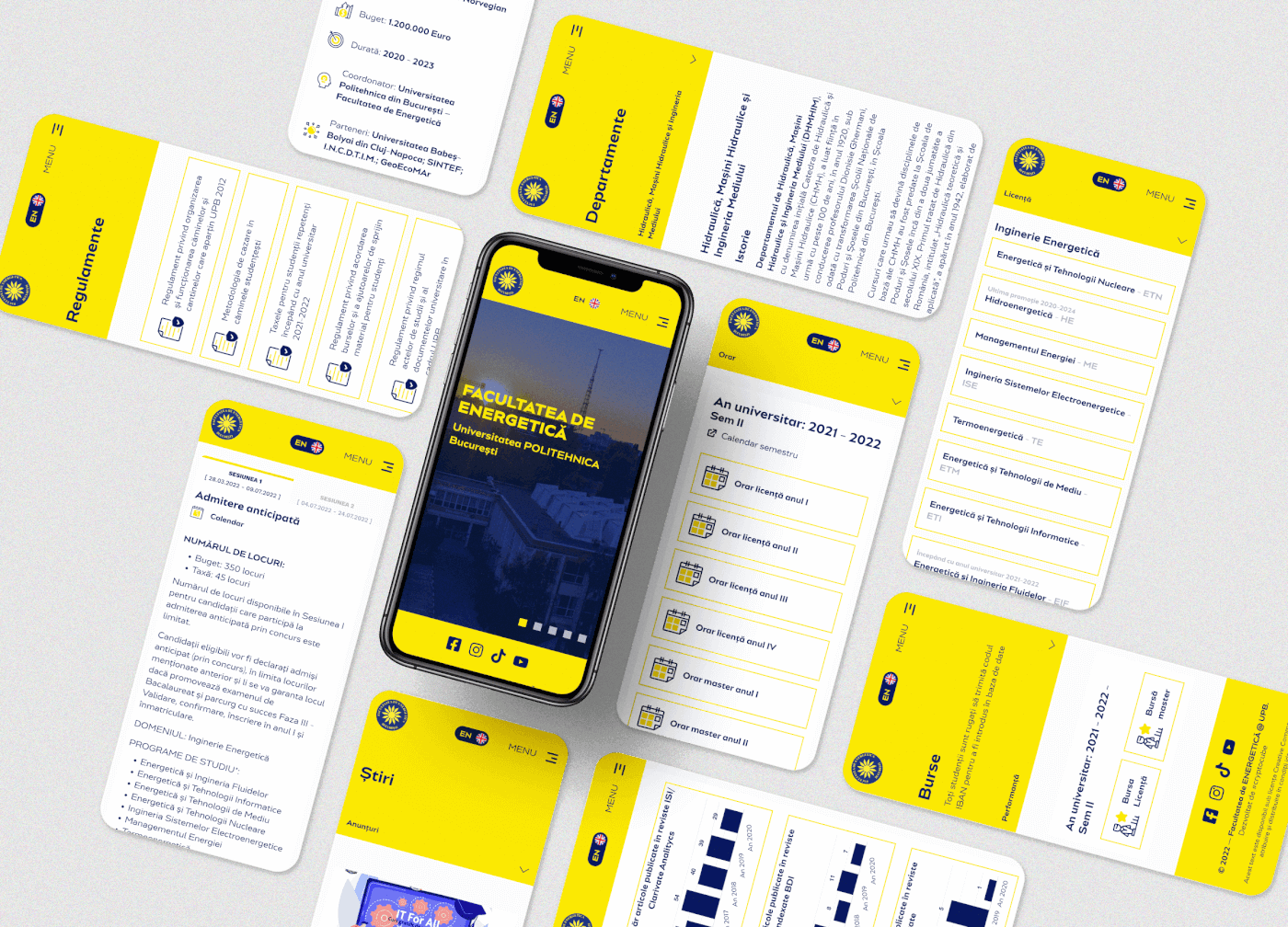 Faculty of Energy Engineering
CMS pentru Facultatea de Energetică @ UPB
Faculty of Energy Engineering
CMS pentru Facultatea de Energetică @ UPB
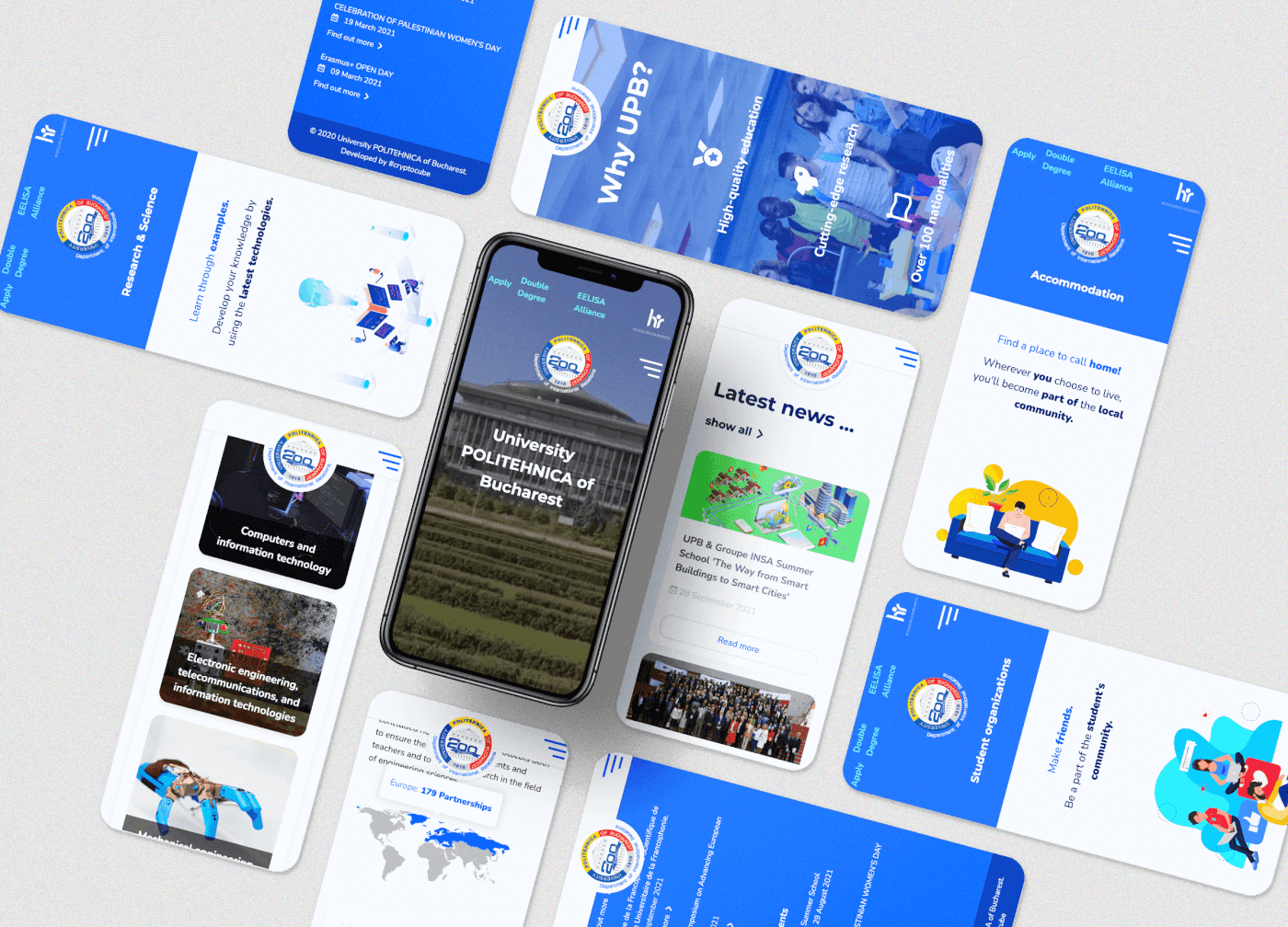 University POLITEHNICA of Bucharest
CMS pentru Departamentul de Relații Internațional
University POLITEHNICA of Bucharest
CMS pentru Departamentul de Relații Internațional
Cum se desfășoară un proiect
-
Scoping Two to four weeks
We sit with the people who use the current system and watch them work, then write down what the software has to do — and, just as usefully, what it does not.
Ce primești: A written scope with the screens listed, the roles defined, the integrations named, and a price for the first phase.
Ce ne trebuie de la voi: Access to the people doing the work, and one person on your side who can decide.
-
First module in production Six to ten weeks after scoping
We build the part with the heaviest daily use first, connected to real data rather than to a demo database.
Ce primești: A working module in production, used by a small group, while the old system stays available beside it.
Ce ne trebuie de la voi: A few people willing to use it early and tell us what is wrong while changing it is still cheap.
-
The rest of the system, a phase at a time The remainder of the project
Each phase adds a part of the system and goes live when it is ready. You are never waiting until the end of the project to see whether it works.
Ce primești: Working software in production at the end of every phase, with the part it replaces switched off only once you agree it can be.
Ce ne trebuie de la voi: A decision at the end of each phase about what comes next, and who is going to use it.
-
Handover, and what happens after Ongoing, on a monthly agreement you can end
We hand over the code, the infrastructure and the documentation — which you have owned since the first phase, not since the last one — and keep running the system if that is what you want.
Ce primești: Repository and infrastructure access in your own accounts, deployment instructions, and an engineer who knows the system by name.
Ce ne trebuie de la voi: A decision on whether your own team takes it over or we keep it.
Cât costă și ce mișcă prețul
Projects in this category start at €70,000. That buys a scoped system with a first module running in production, not a prototype. You get a price before each phase begins, so the number you approve is the number you pay for that phase.
- Number of integrations
- Every system the new one has to talk to adds work: reading its data, matching records that do not match, and deciding what happens when it is unavailable.
- Data migration from the old system
- Moving the records is the small part. Deciding what to do with duplicates, half-filled rows and fields nobody has maintained for years is the rest.
- Number of roles and permissions
- Two roles is a setting. A dozen roles seeing different things on the same screen is a design problem that reappears in every part of the system.
- Compliance requirements
- Audit trails, retention rules, access logging and evidence of approval are built in from the start rather than added afterwards. Where an auditor or a regulator has to be satisfied, that shapes the work.
- Number of users, and how hard they use it
- A system a handful of people open once a day and one several hundred keep open all day are different systems, mostly in the parts you never see.
Întrebări care apar în acest punct
Often, yes. If its data is reachable and it is stable, we build around it — a new interface, the module it never had, an integration — and leave it running.
It gets migrated, and we plan that before we plan anything else. Both systems run side by side while we reconcile them, and the old one stays available until you are satisfied the numbers match.
Usually that happens when a tool is designed without the people who have to use it and arrives finished. We watch people work before we design anything, and the first module goes to a small group early, while their objections can still change it.
The engineers who built it, on a monthly agreement you can end. If you would rather your own team took it over, you already own the code and the infrastructure, and we stay available while they settle in.
Unde au rulat aceste sisteme
Systems in this category have been delivered inside a regulated banking environment and in the public sector. Both bring requirements that shape the software rather than sit next to it: who may see what, what has to be recorded, and what has to be provable a year later.
Dacă nu asta e problema voastră
Conectăm sistemele pe care le plătiți deja, automatizăm documentele și aprobările, și adăugăm AI doar unde eli...
Portaluri & platforme pentru cliențiPlatforme pe care clienții voștri le folosesc singuri, pe web și pe mobil, cu interfața proiectată la noi.
Produse noi & prime versiuniO idee de produs dusă până la o primă versiune funcțională: arhitectură, design, dezvoltare, lansare.
